RapidPipeline for Unreal Engine
Overview
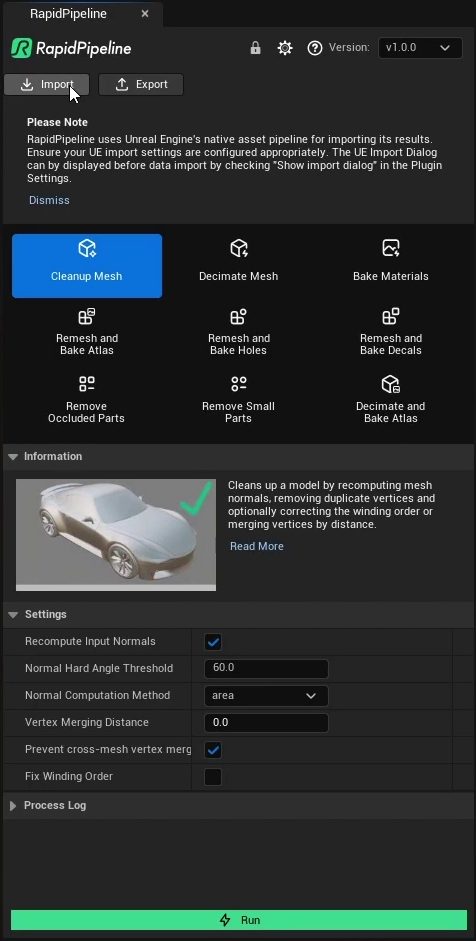
The RapidPipeline Unreal Engine Integration Plugin enables you to use RapidPipeline Actions directly within the Unreal Engine UI as a plugin.
Process, optimize & simplify selected 3D models interactively and 100% locally.
System Requirements
- Unreal Engine versions: v5.6 and v5.7
- Operating System: Windows 10/11 (64-bit)
- Memory: 8GB RAM minimum, 16GB recommended
- Storage: 1GB free space for plugin installation
- Internet Connection: Required for plugin license authentication only.
Installation
How to install the RapidPipeline Unreal Engine Integration Plugin.
- Uninstall earlier versions of the plugin before installing a new version.
1. Get a RapidPipeline Account with Integrations
Start your 14-day free trial or subscribe to a Desktop plan.
If a RapidPipeline subscription is already attached to the account, and if the plan includes API access, then RapidPipeline Integrations are available for use.
2. Download the package
Sign in the RapidPipeline Web Platform.
Scroll down to see the Integrations, and download the latest installer for your application.
If you need a different installer version, click on
Get other versions.
The Integrations Download page offers all current available RapidPipeline Integration packages for download.
Please note the OS specific naming of the packages (e.g. macOS) and the different tags of the installer packages depending on additional functionalities (e.g. CAD Edition). Some packages with additional functionalities such as CAD Edition might require a specific subscription tier or addon package. Learn more on the RapidPipeline Pricing Overview Page.
If you are an end-user of the plugins and do not have your own account, or you are an account manager and want to distribute the plugin packages to users, please refer to our Public Integrations Downloads page. Note that a valid Token from a RapidPipeline account is still required to activate the given integration and generate a seat.
3. Extract the package
Extract the contents of the ZIP archive into the Unreal Engine Plugins folder:
C:\Program Files\Epic Games\UE_5.6\Engine\Plugins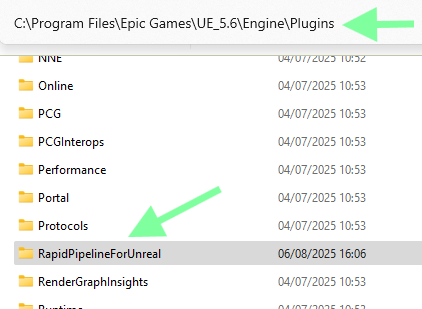
Open your Unreal Engine project.
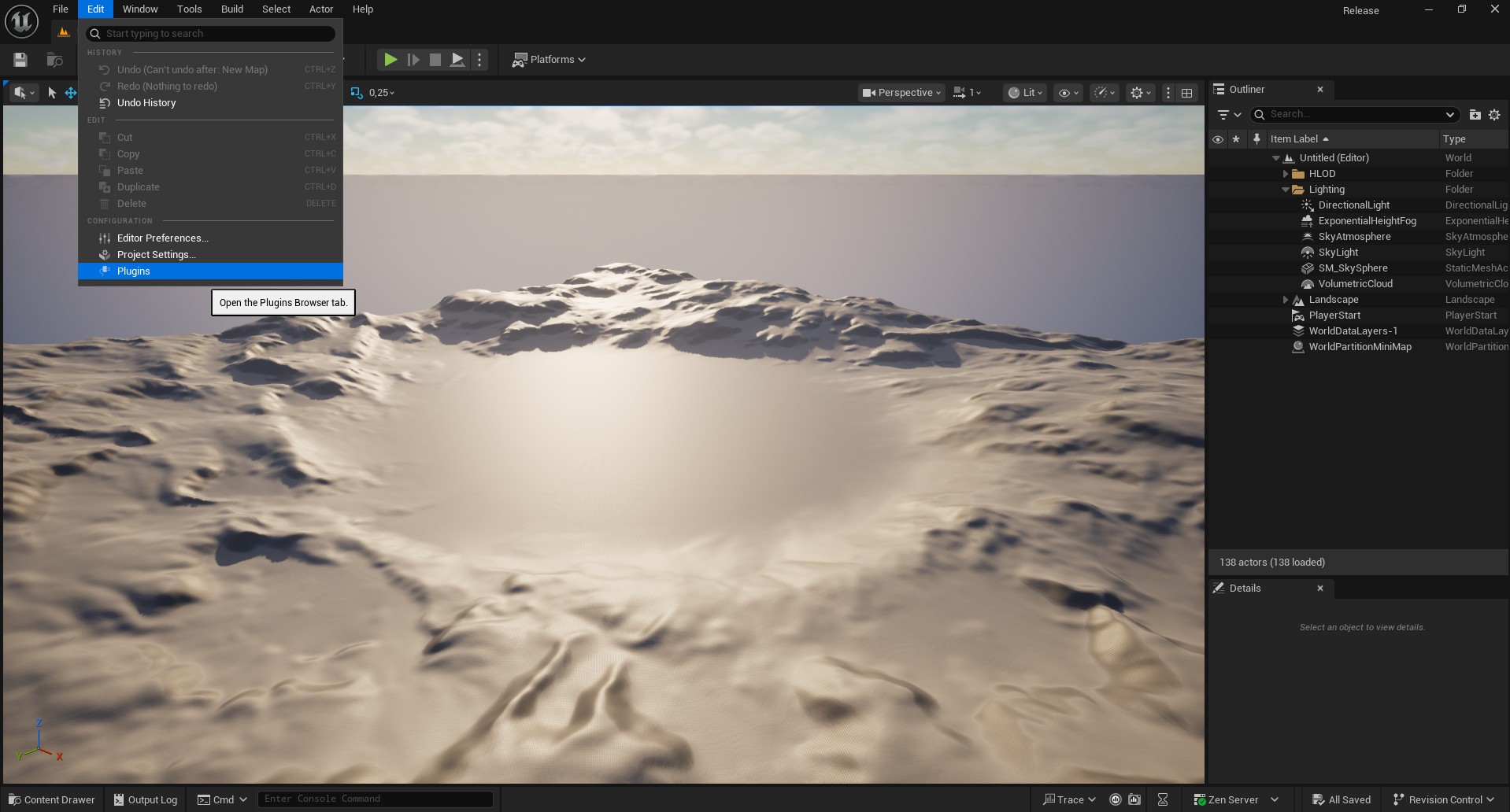
When installing for the first time, go to Edit → Plugins, search for RapidPipeline, and enable it.
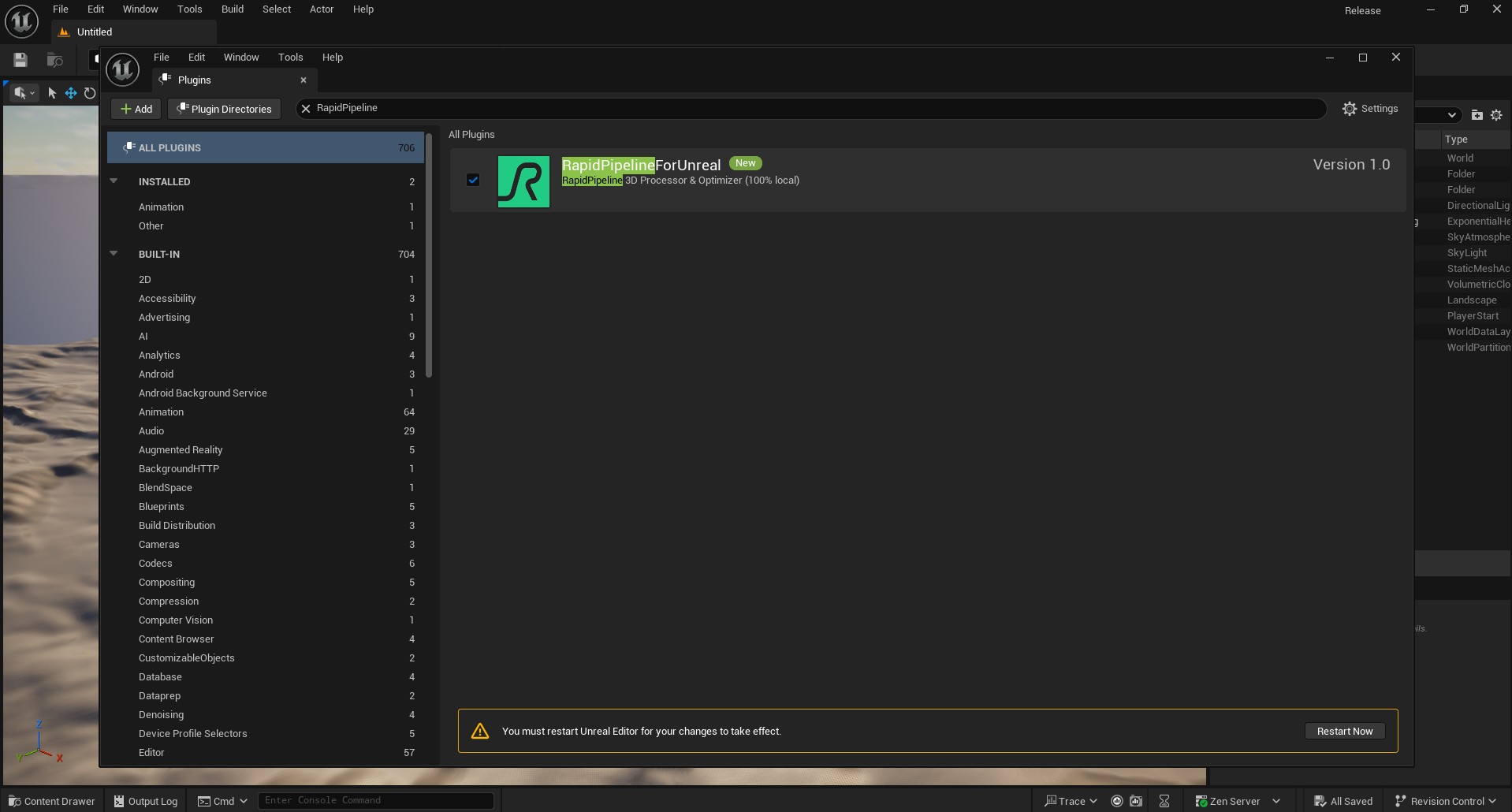
Restart the Unreal Editor.
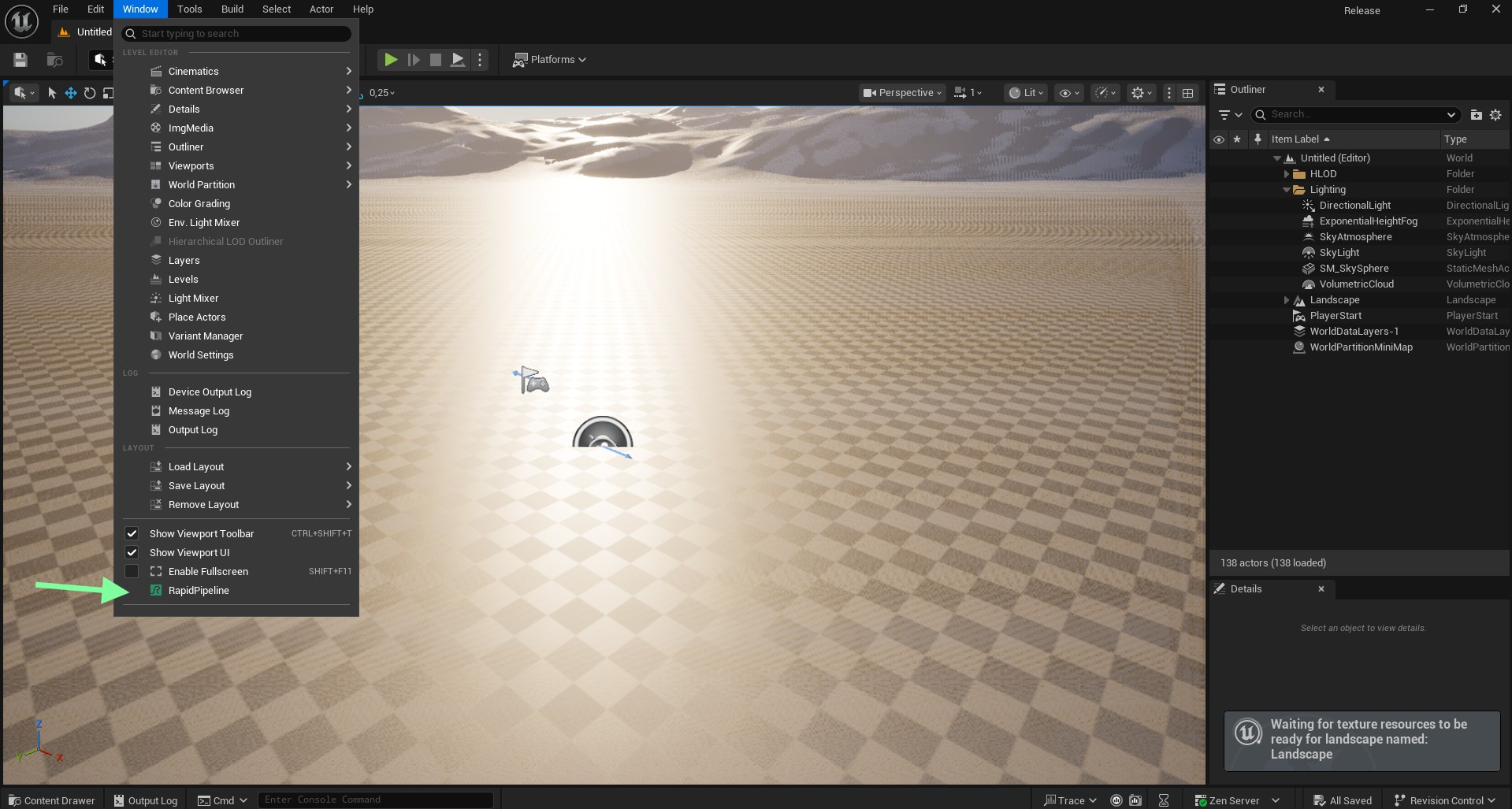
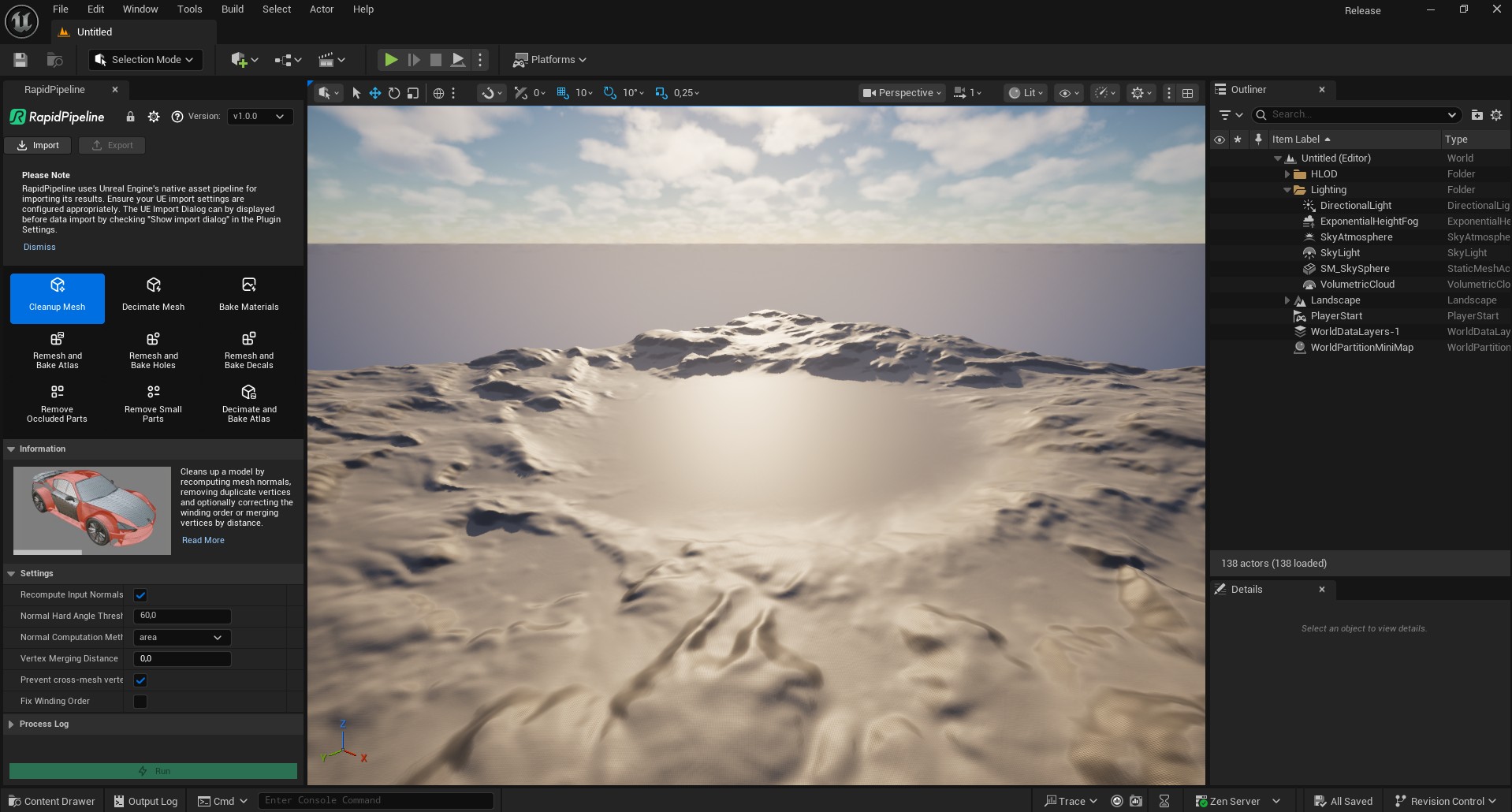
After enabling, you will see a RapidPipeline entry in the Window menu.
If not obtained already, a RapidPipeline Authentication Token will be needed.
4. Enter the RapidPipeline Authentication Token
Watch the video above, or for step-by-step instructions see Integrations Seat Management to learn how to generate and install an Authentication Token.
5. Learn How to Use RapidPipeline
For step-by-step guides see the RapidPipeline for Unreal Engine Integration Plugin Tutorials.
For detailed reference documentation see the Actions Documentation.
Congratulations! The RapidPipeline Unreal Engine Integration Plugin is now ready to be used.
Upgrading the Plugin
To upgrade to a new version of the plugin, we recommend uninstalling the old plugin first.
Close all Unreal Engine installations currently running.
Delete the previous
RapidPipelineForUnrealfolder in:C:\Program Files\Epic Games\UE_5.6\Engine\Plugins\Install the new version by following the installation steps outlined above.
Internal Data Exchange
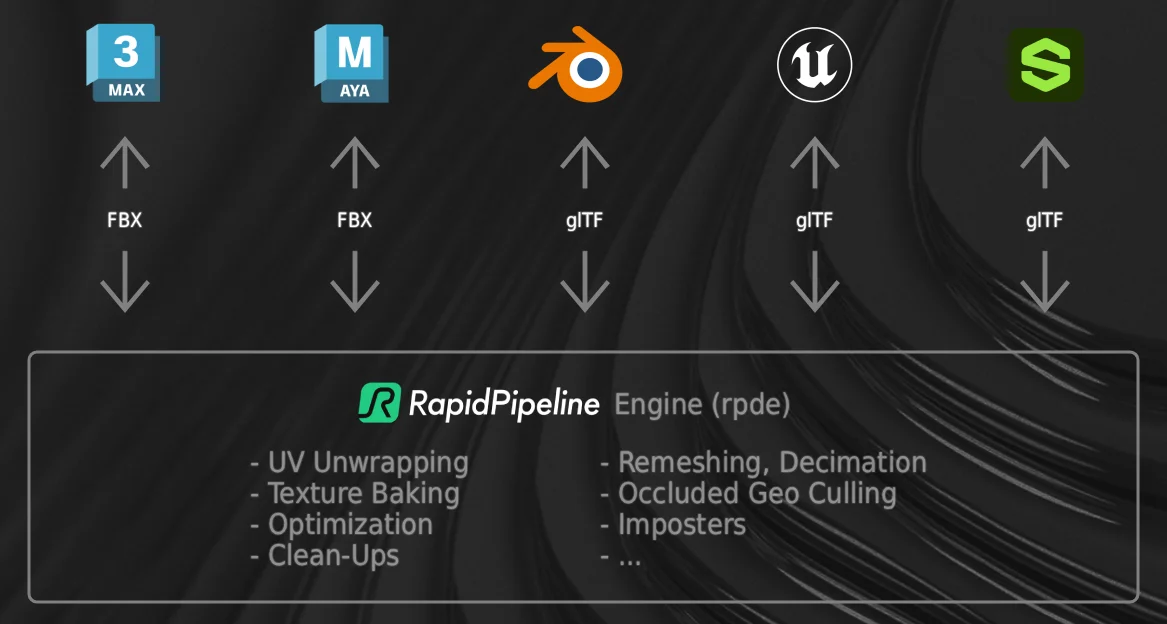
All our integrations leverage the RapidPipeline 3D Processor as an external engine to perform 3D data processing, behind the scenes.
The 3D data is sent to/from the application by leveraging each application's most compatible file format.
Known limitations
The plugin is supported on Unreal Engine versions v5.6 and v5.7 only.
Only Static Meshes are supported. Skeletal Meshes and Blueprints (including any contained Static Meshes) are not supported at this time.
Only glTF Material Options are supported, because the plugin uses glTF as an intermediary format.
Features like procedural nodes and complex material setups are not supported. For Unreal we currently do not offer an automated solution, but we welcome you to contact us about potential support in the future via RapidPipeline DCC Importer.
If the processed output appears incorrect, it may be caused by custom settings in the Interchange Importer. We recommend using the default import settings to ensure proper results.
Unreal Decals are currently not supported. The decals used in the RapidPipeline refer to traditional decals, which consist of a texture with an alpha channel applied to a simple mesh.
Contact Us
Let us know how it's going, we would like to get your quick feedback here!